Pell City, AL ยท Serving St. Clair, Shelby, Jefferson, and Etowah Counties
Guaranteed Fence and Deck

Farm Fence Installation

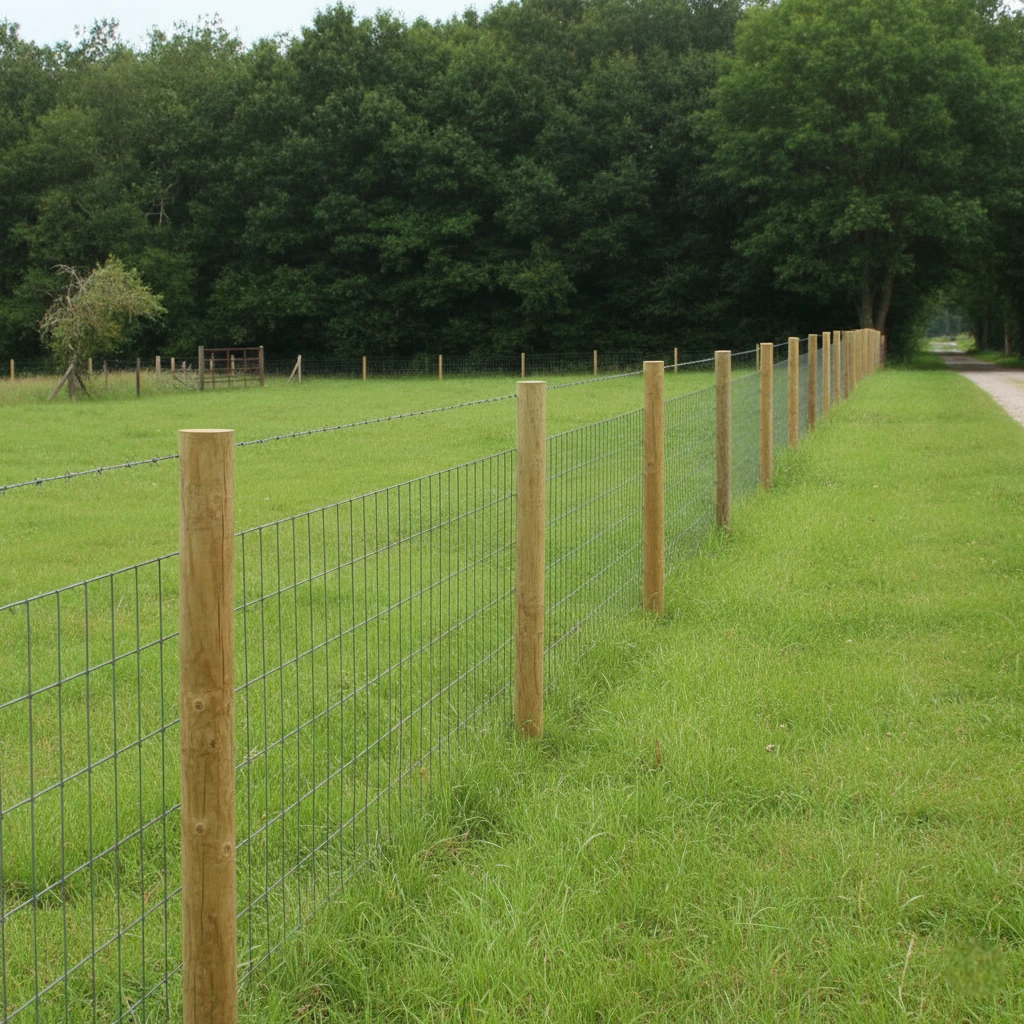
Field fence, high-tensile wire, barbed wire, woven wire, and horse fence for rural acreage in St. Clair, Etowah, and outlying Shelby and Jefferson. Alabama is not an open-range state. The law sets minimum fence specifications for cattle, horses, and goats, and we build to those specs.

Ready to Build Your Fence or Deck?

Farm Fence for Alabama Acreage and Livestock Use

Farm fence has to be planned around animals, acreage, equipment access, terrain, and daily use. Rural properties around Springville, Odenville, Ashville, Ragland, Southside, and Gadsden often need long runs, properly built corner brace assemblies, smarter gate placement for trailers and tractors, and a wire type that matches what is actually on the land. Alabama is not an open-range state. Under Alabama Code Section 3-5-2(c), livestock owners are responsible for containing their animals. The minimum fence dimensions for cattle are spelled out in Sections 3-4-1 through 3-4-5: at least three wires, posts no more than eight feet apart, wires spaced no more than 15 inches apart, with the top wire at least four feet high. Guaranteed builds to those specifications on every livestock fence.

  • Field fence, woven wire, high-tensile, barbed wire, horse fence, ranch fence, and post-and-rail available
  • Brace assemblies and gate locations planned for livestock pressure, trailer access, tractor clearance, and feed movement
  • Layouts adapted to rolling terrain, low spots, tree lines, seasonal washouts, and rural right-of-way setbacks

A pasture fence that works on a flat hobby lot can fail quickly on a long sloped run with cattle pressure at the corners. The terrain and the animals drive the plan more than the product name.

Farm Fence

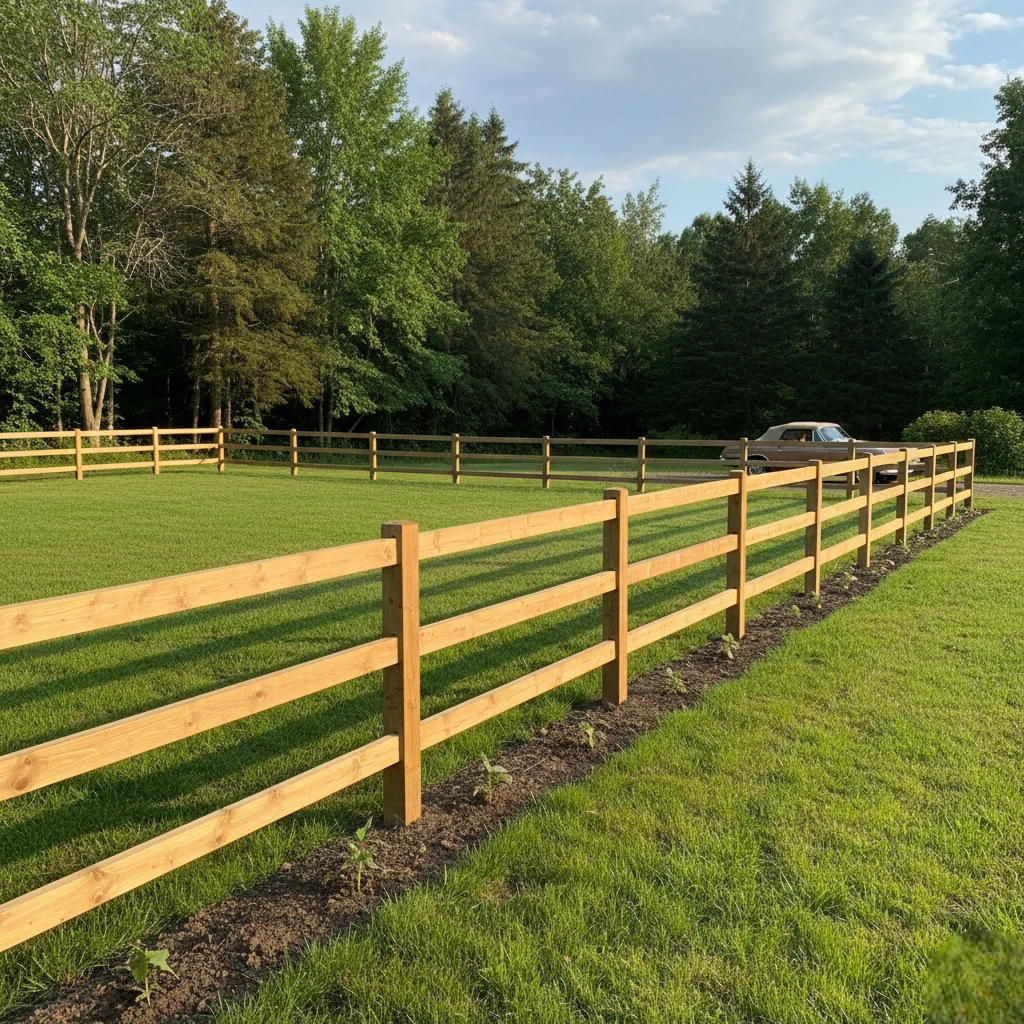
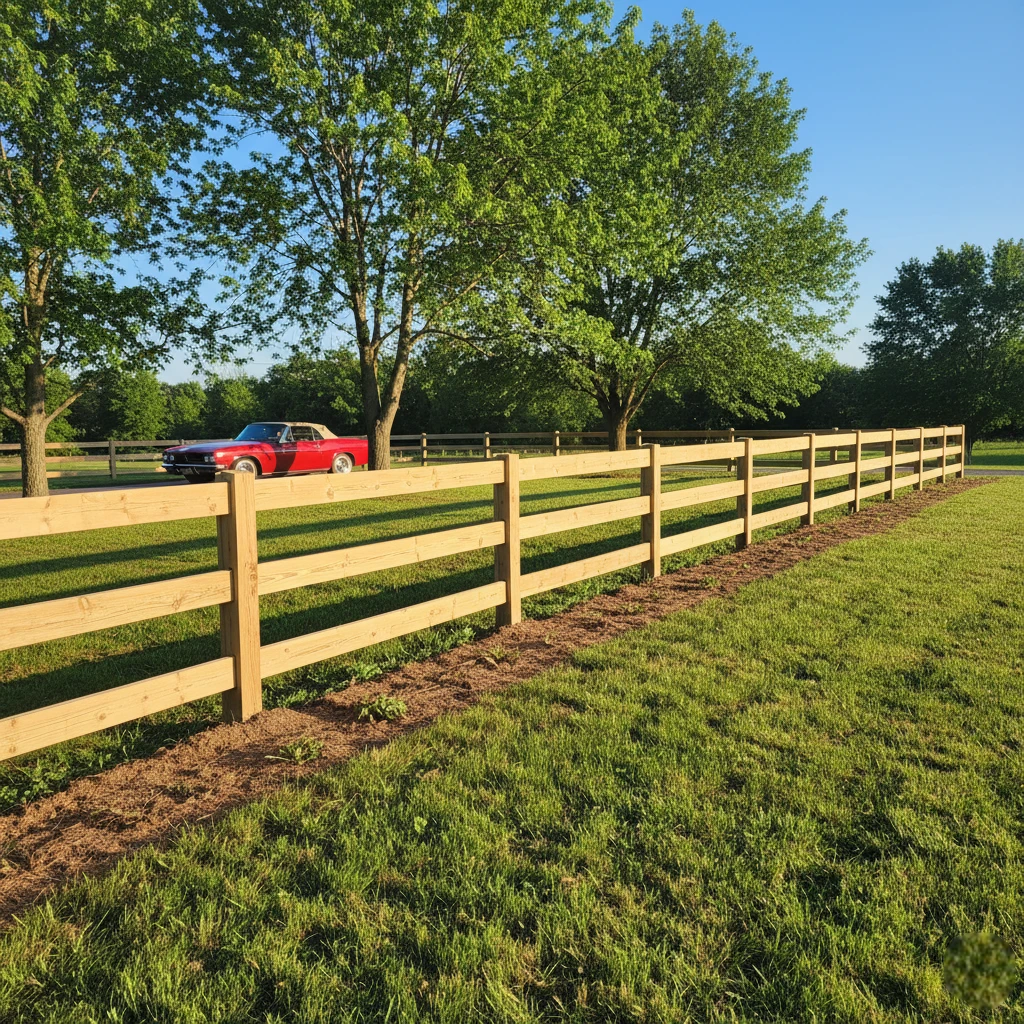
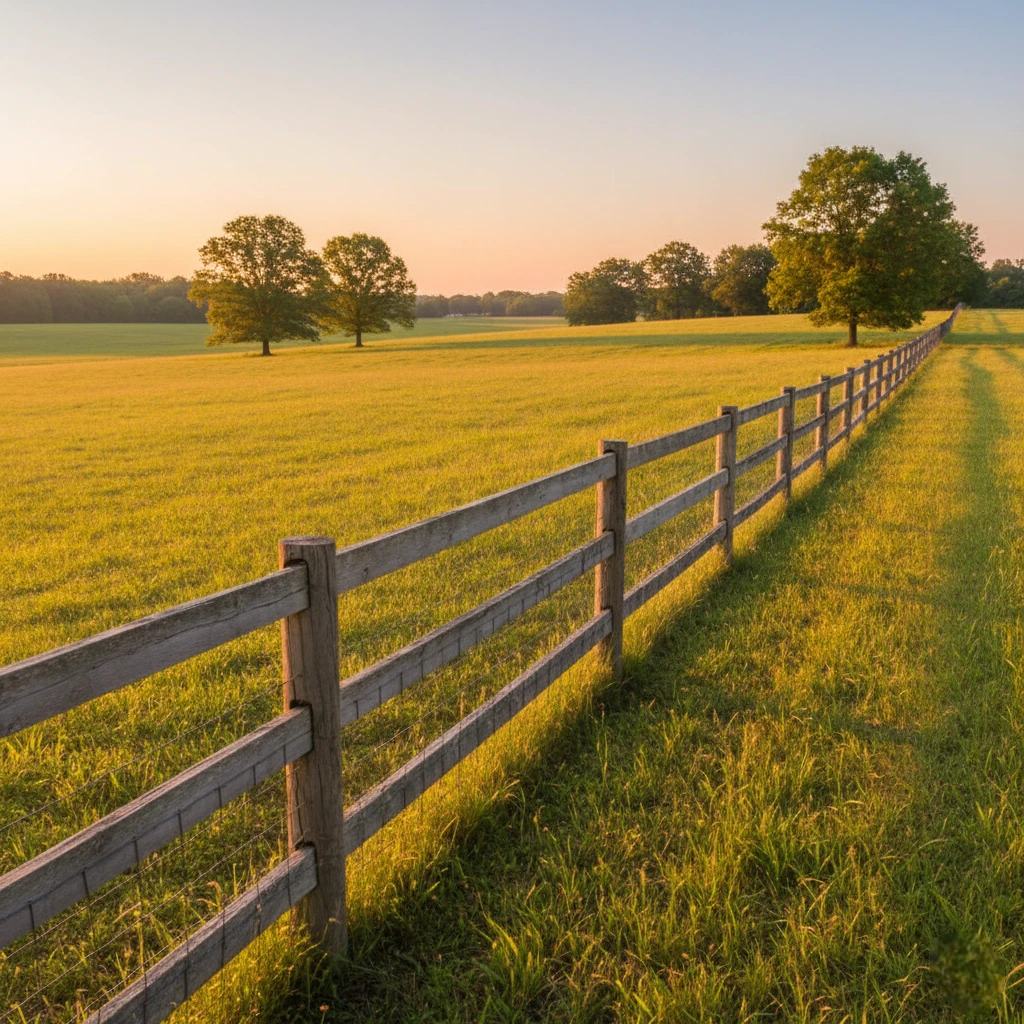
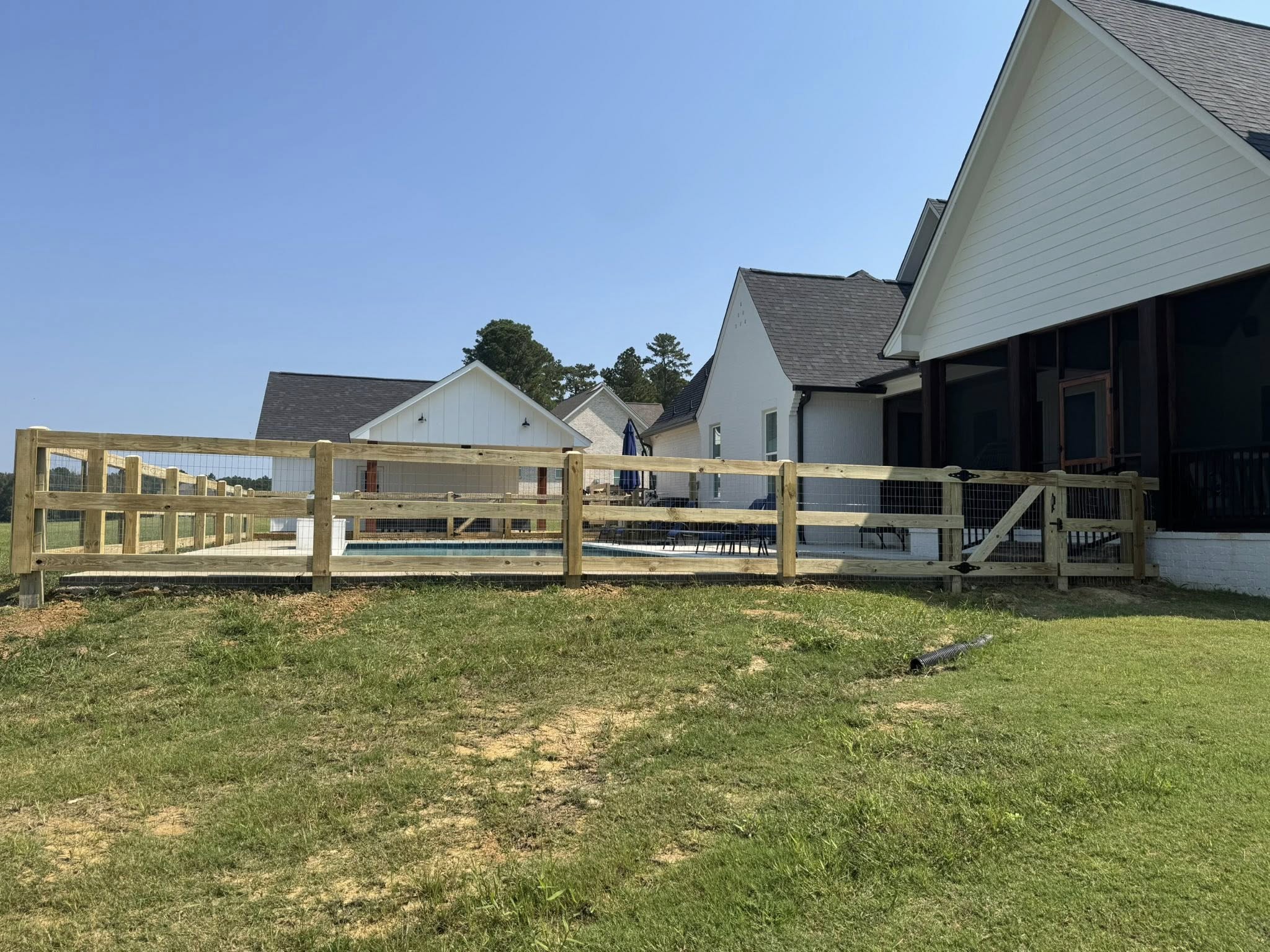
Farm Fence Styles

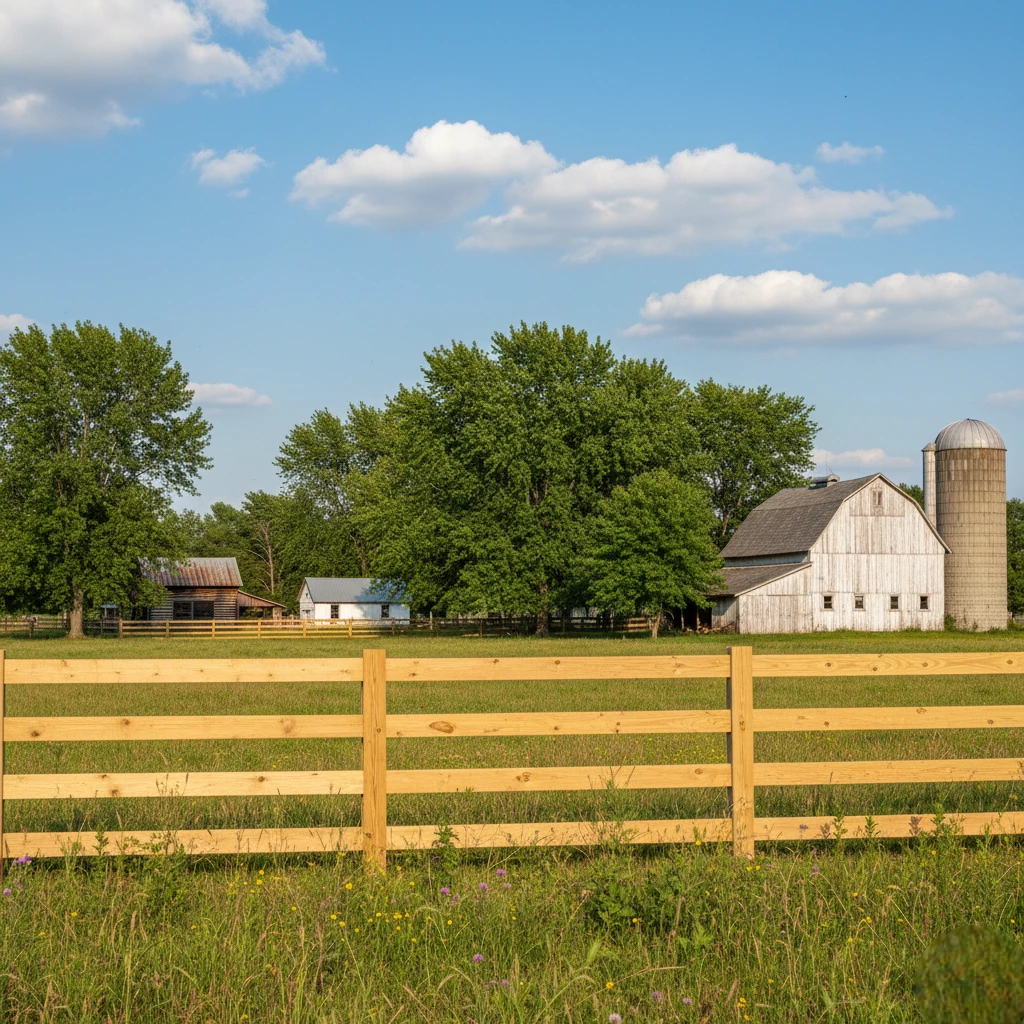
Six farm-fence styles for the most common livestock and boundary needs.

Field Fence

Field Fence

Pasture Fence

Pasture Fence

Livestock Fence

Livestock Fence

Wire Fence

Wire Fence

Ranch Fence

Ranch Fence

Post and Rail

Post and Rail

Planning Your Farm Fence Installation

These planning details help the finished project fit the property, the animals, the equipment access plan, and the long-term maintenance needs.

Livestock and Field Layouts

Livestock and Field Layouts

Fence layout should account for animals by species, water source locations, shade, gate placement for trailers and tractors, equipment clearance, terrain changes, and future pasture rotation use.

Rural Gate Planning

Rural Gate Planning

Gate placement on a farm fence matters for trailer backing, tractor clearance, feed delivery, and clean daily movement around the property. We size and position gates for real agricultural use.

Features and benefits

Why Acreage Owners Pick Us

Long runs, proper corner bracing, and livestock-specific wire choices make or break a farm fence.

Why Acreage Owners Pick Us

Corner bracing built right

Wood H-brace and cross-brace assemblies at corners and gates, sized for the wire tension and the livestock applying pressure.

Long-run pricing

Roll pricing for boundary runs across larger acreage, with USDA EQIP cost-share guidance for qualifying properties.

Right-of-way aware

St. Clair County subdivision rules require fences off the right-of-way with a 10-foot clear zone over culverts and cross pipes. We plan around those setbacks.

Livestock-specific wire

Horse-safe no-climb woven wire, cattle field fence, and goat-tight options matched to the animals on the property.

Service Areas We Cover

Guaranteed Fence and Deck serves homeowners, lake-home owners, farms, rental properties, and business properties across St. Clair, Shelby, Jefferson, and Etowah counties.

View all service areas

Local Fence Knowledge

Farm and acreage fencing in north St. Clair, Etowah County, and the rural edges of Shelby and Jefferson demands more planning than a residential backyard run. Long boundary lines need strong corner brace assemblies, properly sized gate openings for trailers and tractors, and wire types suited to the animals on the property. On rolling ground near Springville, Odenville, Ashville, Ragland, and Southside, the fence layout has to account for seasonal washouts, low spots, tree lines, and right-of-way setbacks before posts are driven. Etowah County acreage owners should also know that USDA NRCS EQIP cost-share can cover 75 to 90 percent of qualifying agricultural fence costs: the local NRCS office for Etowah County is in Gadsden, and Guaranteed can help spec a build that fits the program requirements.

Frequently Asked Questions

What fence does Alabama law require for cattle on my farm?

Alabama Code Section 3-4-3 sets the minimum standard: at least 3 wires, posts no more than 8 feet apart, wires no more than 15 inches apart, and the top wire at least 4 feet high. A 47-inch woven wire fence with proper post spacing and brace assemblies meets the more comprehensive Section 3-4-5 standard and is the most common cattle-fence build in Etowah and St. Clair counties. Reference: https://nationalaglawcenter.org/wp-content/uploads/assets/fencelaw/alabama.pdf

Can I get financial assistance for building a farm fence in Alabama?

Yes. The USDA NRCS Environmental Quality Incentives Program (EQIP) can cover 75 to 90 percent of farm fencing costs for qualifying conservation projects in Alabama. The Etowah County NRCS office is located in Gadsden. We can help spec a fence build that meets EQIP program requirements so you go into the application with a clear materials and cost plan. Reference: https://bomannfencing.com/blog/high-tensile-wire-fence

How much does farm fence installation cost per acre or per foot in Alabama?

HomeAdvisor national data puts agricultural fencing at $630 to $5,900 per acre, averaging around $1,700. Per-foot installed ranges from $1 to $10 for wire fencing. Typical cattle fence projects in the Southeast run $4 to $7 per linear foot installed for woven wire with wood brace posts and metal T-posts. Long runs cost less per foot than shorter perimeter builds with more corners and gates. Reference: https://www.homeadvisor.com/cost/fencing/woven-wire-fence/

What happens if my livestock gets out because my fence was not maintained?

Under Alabama's fence-in law (Alabama Code Section 3-5-2), the livestock owner is responsible for property damage caused by escaped animals. Willful or negligent escape also constitutes a misdemeanor. Alabama is not an open-range state, which means the burden to contain animals falls on the owner, not on neighboring property owners to keep animals off their land. Reference: https://alfafarmers.org/ag-law-you-liability-for-loose-livestock/

Does farm fence installation require a permit in rural Alabama counties?

Agricultural fencing in unincorporated rural areas generally does not require a building permit. Unincorporated Etowah County and unincorporated St. Clair County both fall into this category. However, if your farm property is within the city limits of Gadsden, Rainbow City, Southside, or Attalla, a permit may be required. We confirm the permit posture for your specific address before work starts. Reference: https://bomannfencing.com/blog/field-fence-barbed-wire-cattle

Related Services

Combine your farm fence with a gate project, a barn-area run, or a rural boundary repair on the same schedule.

Fence Installation

Fence Installation

Full-service fence installation for Pell City homes, lake properties, farms, and businesses across St. Clair, Shelby, Jefferson, and Etowah counties.

Wood Privacy Fence

Wood Privacy Fence

Board-on-board, stockade, and cap-and-trim wood privacy fence built for Alabama weather and red-clay soil movement.

Chain Link Fence

Chain Link Fence

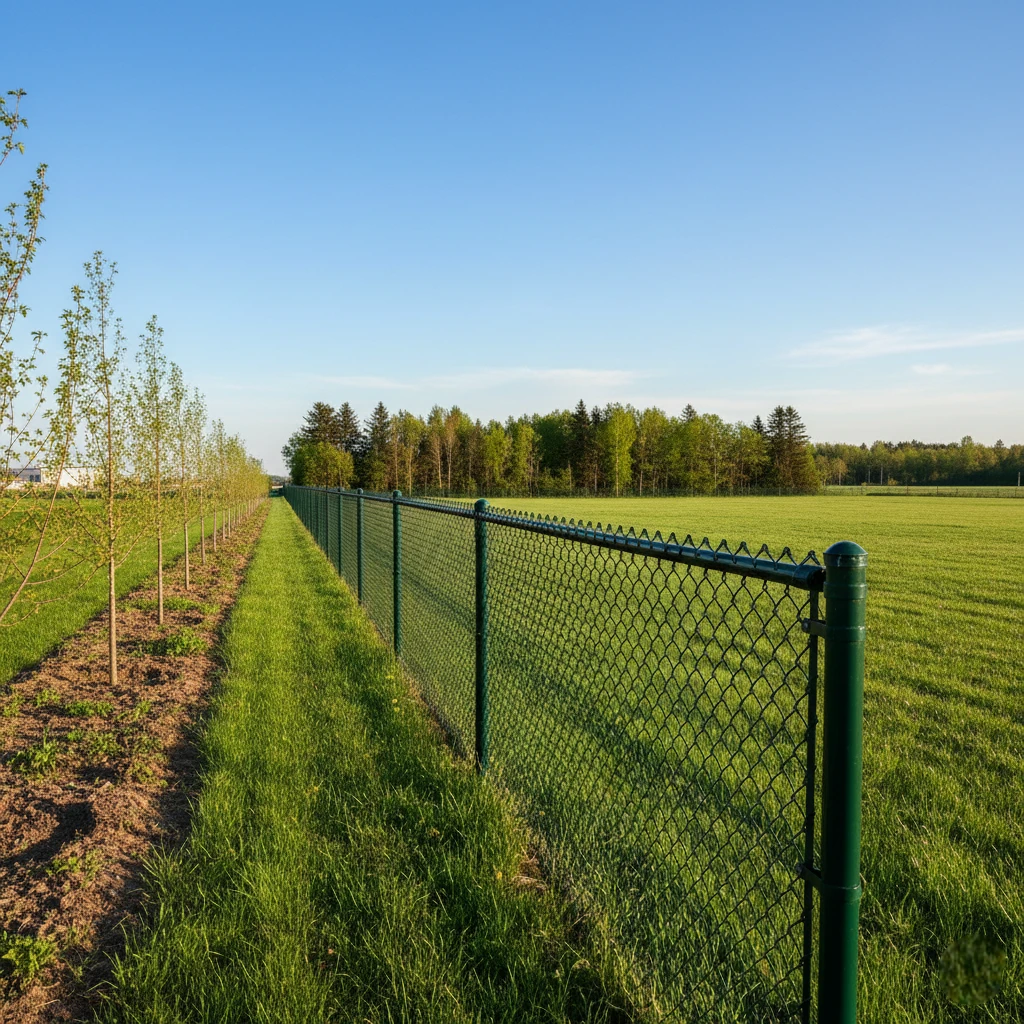
Galvanized and vinyl-coated chain link for backyards, rural acreage, business properties, and rental properties across the Birmingham East metro.

Ready for a fence or deck estimate?

Call 205-983-2218 or send the project details and Guaranteed Fence and Deck will follow up to plan the build.